
There comes a point at every enormous international trade show when you stop pretending you know where you are.
Your phone is at 14 per cent. You have walked the equivalent of a half-marathon. Your calendar says you should be meeting somebody from Switzerland in four minutes, LinkedIn tells you that you have made 47 new connections, and you are standing in the middle of an exhibition hall wondering whether 8S91 is a stand number, a Wi-Fi password or a distress signal.
Welcome to CPHI.
From 6 to 8 October 2026, a sizeable chunk of the global pharmaceutical industry will descend on Fiera Milano in Rho for three days of science, manufacturing, technology, ingredients, CDMOs, supply chains, biologics, regulation, sustainability, artificial intelligence and a quite extraordinary amount of networking.
The scale is difficult to appreciate until you are there. CPHI says its 2025 event attracted more than 62,000 attendees, 2,900 exhibiting companies and participants from more than 166 countries. For 2026, the organisers are promoting a programme featuring more than 250 expert speakers and over 130 content sessions. CPHI's more recent visitor material refers to more than 2,400 exhibitors for Milan, so the final number may continue to change as the event approaches.
Either way, it is enormous.
And that creates a problem. How do you actually make the most of it?
As the Allex.ai team prepares for Milan, we have been doing our homework. We have looked through the official programme, travel information, networking events, new exhibition areas and practical information to put together something we would genuinely want to read before attending.
So consider this the Allex.ai Guide to CPHI Milan 2026: what is happening, what is new, what people are talking about, how to get there, what to see when you escape the exhibition centre and, naturally, where you can find us.
Allex.ai will be in Hall 8, Stand 8S91.
You might want to remember that number.
Why CPHI Milan matters this year
CPHI has always been big, but what makes 2026 particularly interesting is the direction in which the event is expanding.
Four new dedicated zones have been introduced this year: AI & Tech, Cold Chain & Logistics, Contamination Control and Labelling. They join established areas covering everything from APIs and bioproduction to contract services, excipients, machinery, packaging, finished dosage forms and drug delivery.
Those additions offer a useful snapshot of what is currently occupying the industry's attention.
Artificial intelligence is perhaps the most obvious example. Pharma has moved remarkably quickly from asking whether AI might transform the industry to trying to work out which applications genuinely deliver value. CPHI says its AI & Tech area will explore technology across drug discovery, clinical trials, manufacturing, operations and commercial analytics.
That distinction matters.
The interesting conversation is no longer simply, "Can we use AI?"
It is becoming, "Where should we use it, what problem does it solve, how do we integrate it into regulated operations and what happens when the technology meets the messy reality of an international pharmaceutical organisation?"
The same is true of supply chains, manufacturing capacity and resource management. Pharmaceutical companies rarely suffer from a shortage of ideas or projects. The problem is often that everything is happening simultaneously and many supposedly independent programmes require the same specialists, equipment, facilities and management attention.
One project slips. Another suddenly becomes critical. A regulatory requirement changes. A key specialist is reassigned. A deadline moves. Somebody adds another "top priority".
Then the beautifully constructed annual plan meets reality.
Reality tends to win.
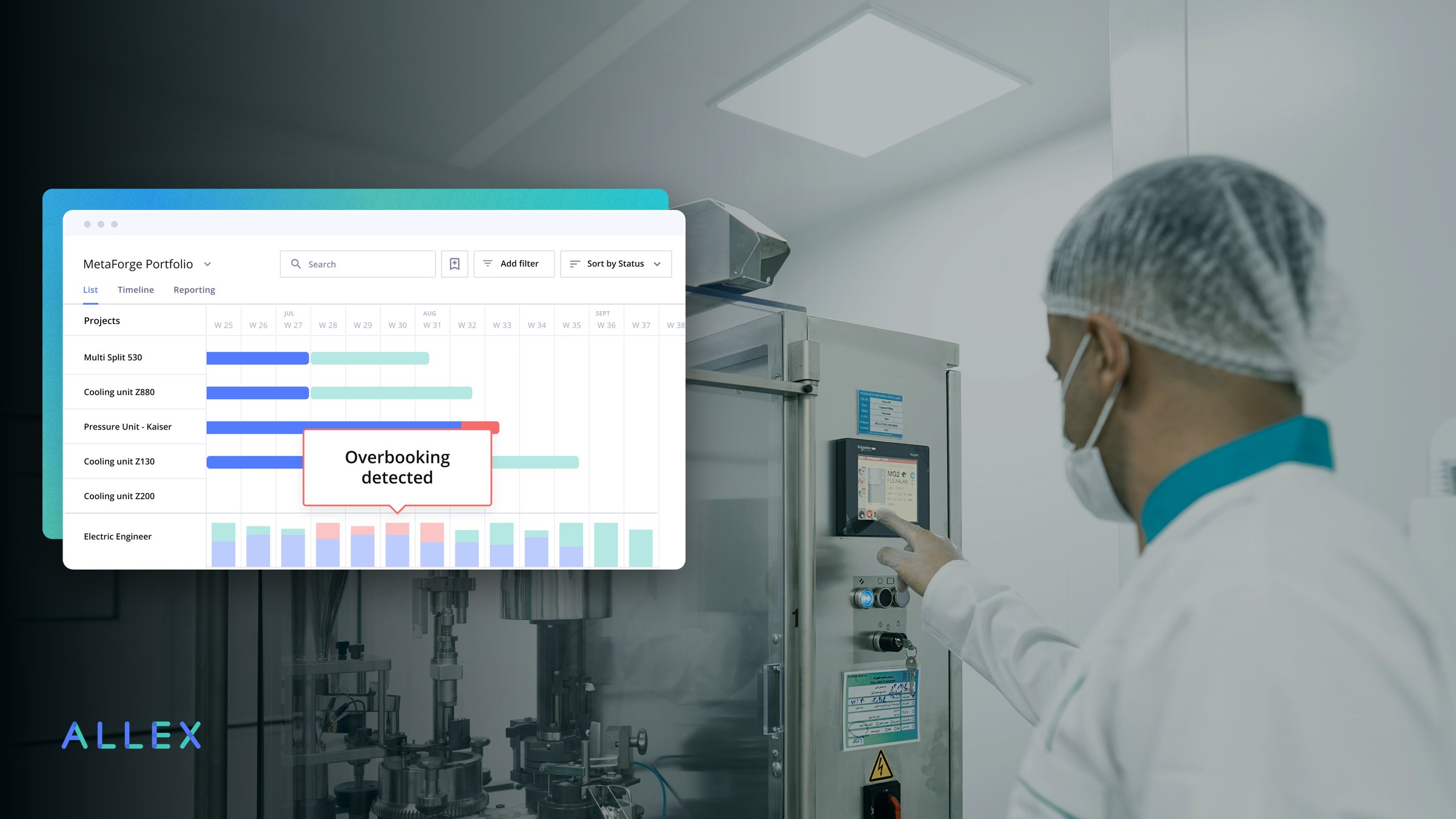
It is precisely this gap between strategy and execution that makes this year's conversations around technology, capacity and operational resilience particularly interesting.
Sustainability moves from the slide deck to the agenda
Another major addition for 2026 is CPHI's inaugural Sustainability Summit, which will take place alongside the main exhibition on 6 and 7 October.
The organisers expect more than 300 sustainability leaders and decision-makers to participate, with more than 20 roundtables alongside peer discussions and working groups. CPHI describes the ambition as moving the industry towards "decisive industry action".
That wording is important because pharmaceutical companies are not exactly short of sustainability statements. The harder questions begin when those ambitions encounter manufacturing realities, procurement decisions, international supply chains, regulation, cost pressures and ageing infrastructure.
It is one thing to announce a target. It is quite another to deliver it across a complicated global organisation.
The Sustainability Summit should therefore be one of the more interesting places to listen rather than simply collect business cards.
So, who is actually going to be there?
The short answer is: quite a lot of the pharmaceutical world.
CPHI's featured exhibitors for Milan include companies such as Samsung Biologics, Thermo Fisher Scientific, Lonza, BD, Stevanato Group, Merck, Pfizer, Gerresheimer, Procaps Group and Hetero. Thousands of smaller manufacturers, suppliers, CDMOs, technology companies and specialist businesses will join them.
The conference programme is similarly broad, with more than 250 speakers covering AI and technology, biomanufacturing, manufacturing, investment, regulation, R&D, sustainability, supply chains, packaging and drug delivery.
One area worth watching is the Leadership Summit. Announced speakers include Dr Nina Rawal of Emerging Health Ventures, Dr Adriana Kiędzierska-Mencfeld of Rezon Bio, Andrea Rothmaler of Boehringer Ingelheim Biopharmaceuticals, Christiane Bardroff of Fujifilm Biotechnologies, Faye Freeman of Centrient Pharmaceuticals and Jean-Christophe Hyvert of Lonza Capsugel.
And because somebody will inevitably ask: what about celebrities?
We checked.
At the time of writing, we could find no officially confirmed mainstream celebrity guest or entertainment headliner for CPHI Milan 2026.
So, regrettably, I cannot promise George Clooney discussing pharmaceutical technology transfer in Hall 6.
Then again, this is pharma. If your idea of celebrity is somebody capable of speaking enthusiastically for 45 minutes about biologics capacity, continuous manufacturing or CDMO strategy, you are going to be surrounded by A-listers.
What should you actually listen to?
With more than 130 content sessions, attempting to attend everything would require either cloning technology or a flagrant disregard for the laws of physics.
Instead, I would focus on the themes sitting at the intersection of different parts of the industry.
The AI and technology programme is an obvious place to start, particularly for anyone working in manufacturing, digital transformation or operations. Biomanufacturing should also be high on the list as companies continue dealing with questions of scale, complexity and infrastructure. Manufacturing and supply-chain discussions are particularly relevant at a time when resilience, capacity and geopolitical uncertainty remain firmly on executive agendas.
The regulatory and policy sessions matter for a similarly obvious reason: pharmaceutical innovation does not happen in a vacuum. Neither does AI.
Perhaps the best approach is to deliberately attend at least one session that sits outside your usual professional bubble. If you work in operations, listen to AI. If you work in technology, listen to manufacturing. If you work in strategy, listen to the people responsible for executing it.
The most useful thing you hear in Milan may come from somebody whose job looks nothing like yours.
Allex.ai is coming to CPHI
You will find us in Hall 8 at Stand 8S91.
Allex.ai works in AI-supported multi-project and resource management, which sounds wonderfully orderly when written in a sentence.
The environments our customers operate in are often rather less tidy.
Pharmaceutical organisations can have hundreds of projects moving simultaneously. There are facility projects, technology implementations, engineering programmes, product transfers, operational improvements, transformation initiatives, validation activities and strategic programmes, often drawing upon the same finite group of specialists.
The challenge is not simply managing individual projects. It is understanding what happens across the entire portfolio when something changes.
Allex connects projects, priorities, dependencies and resource capacity in one environment, allowing organisations to identify bottlenecks earlier and understand the consequences of decisions before those consequences become expensive surprises.
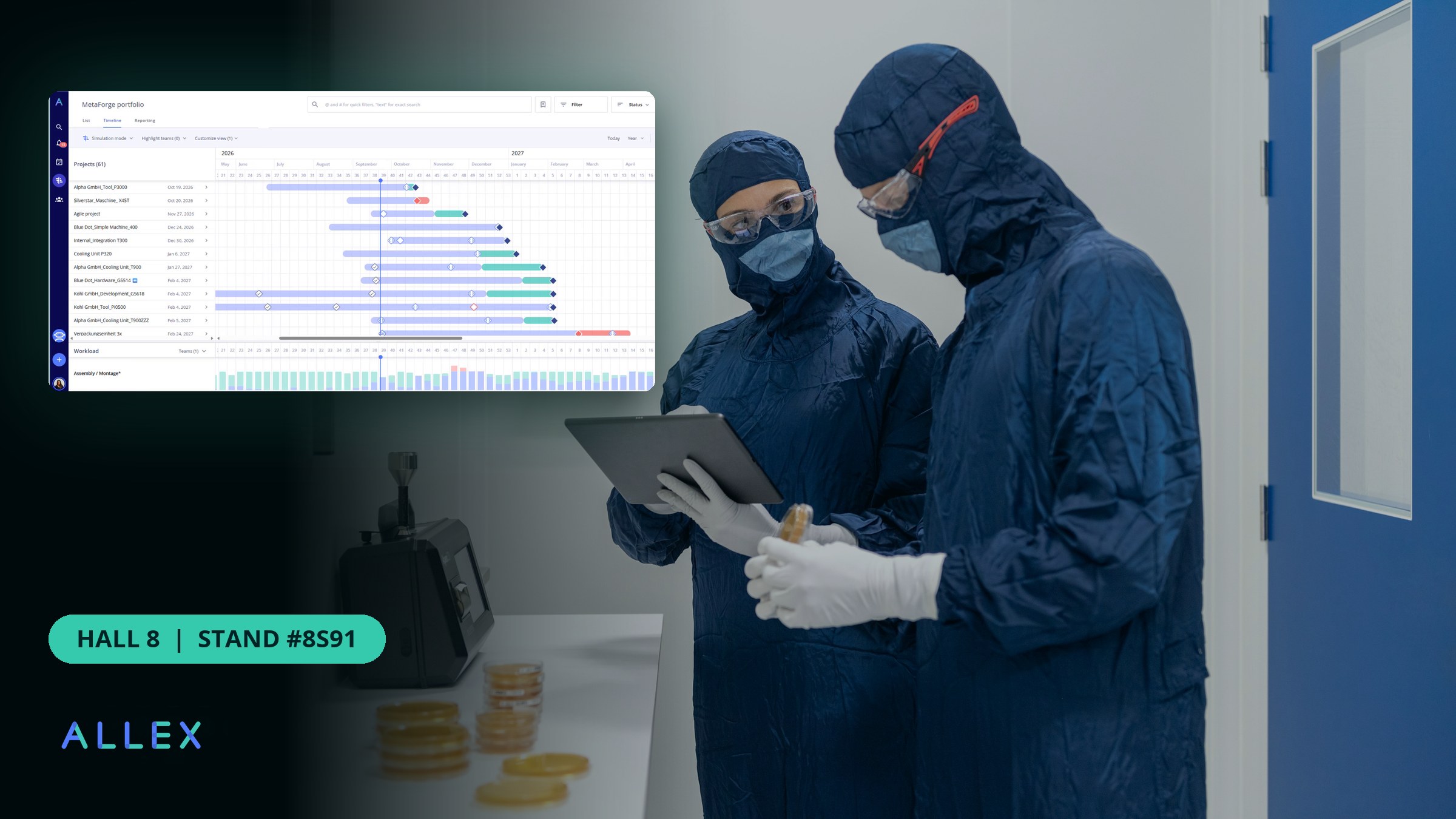
Our CPHI profile also features our work with Lonza, where the published customer case reports that CCPM and Allex supported improvements of 20 to 25 per cent in cleaning and changeover processes.
So, if you are responsible for a pharmaceutical project environment where the same five specialists somehow appear to be required for every critical initiative, we should probably talk.
Catch Holger Lörz on stage
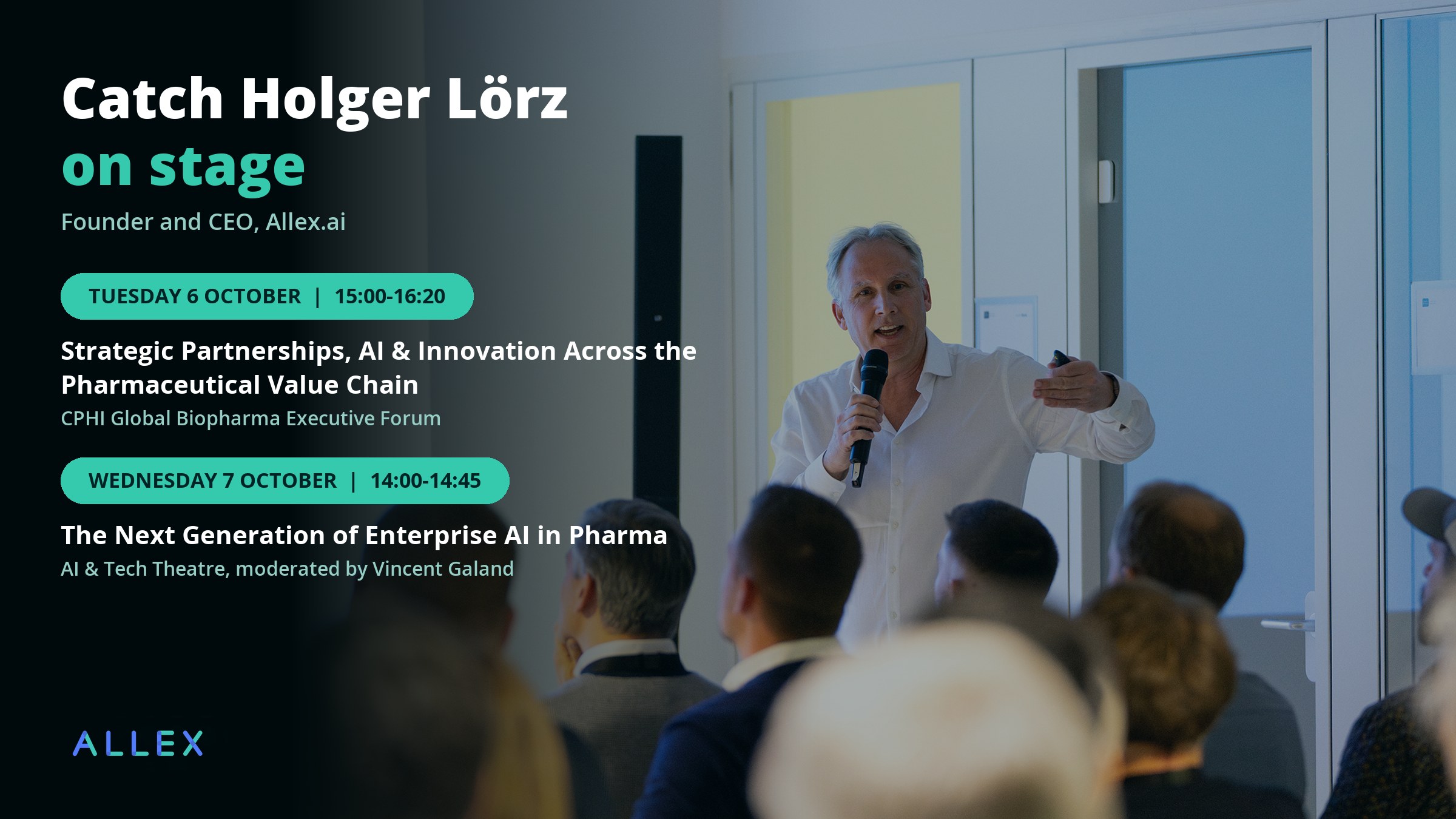
Our Founder and CEO, Holger Lörz, is confirmed for two panels during CPHI Milan.
- Tuesday 6 October, 15:00 to 16:20
Strategic Partnerships, AI & Innovation Across the Pharmaceutical Value Chain
CPHI Global Biopharma Executive Forum - Wednesday 7 October, 14:00 to 14:45
The Next Generation of Enterprise AI in Pharma
AI & Tech Theatre, moderated by Vincent Galand
If you would like to arrange a conversation beforehand, you can connect with Holger, with William Delaney from our Press, Marketing and Communications team, or with any member of the Allex.ai team attending the show.
For media, interviews, content and partnership enquiries, William will also be available throughout the event.
And, of course, you can simply walk over to Hall 8, Stand 8S91.
How I would approach the three days
The first rule of CPHI is not to arrive on Tuesday morning without a plan.
Monday evening already offers opportunities to meet people before the exhibition doors officially open. CPHI's Welcome Reception is scheduled at Villa Necchi Campiglio, followed by an after-hours Duomo experience for eligible registered attendees. The latter includes access to Milan's cathedral and an organ concert, which is certainly a more dramatic opening to a pharmaceutical conference than standing beside a tray of lukewarm prosecco in a hotel function room.
Tuesday should be about orientation.
Do not attempt to see every exhibitor. You will fail, become exhausted and remember almost none of them. Instead, identify the companies and people you genuinely want to meet, map them before arriving and leave enough time to explore.
The official CPHI Event Planner allows visitors to search exhibitors, save companies, arrange meetings and organise their schedule. Use it. With a venue this large, arranging four consecutive meetings on opposite sides of the exhibition is less a diary than an endurance sport.
Tuesday is also a good opportunity to explore the new AI & Tech area and some of the Leadership Summit programme before returning to the people and companies that deserve longer conversations.
Then comes Wednesday, which is usually when a large exhibition hits full speed.
By now, everybody knows the venue. Calendars are full. LinkedIn connection requests have multiplied. Feet have begun formal negotiations with management.
For the alarmingly energetic, CPHI is organising a 5K City Run beginning at 06:30 near the Galleria at Piazza del Duomo and finishing at Parco Sempione. Participation is limited.
A sunrise run through Milan sounds beautiful.
At 06:30, however, I maintain that the only reasonable thing to run towards is an espresso machine.
Later in the day, CPHI is offering complimentary gelato in its Cold Chain area, followed by an evening happy hour at Corso Italia. There are also networking spaces, professional LinkedIn headshots and, somewhat wonderfully, an AI-generated temporary tattoo experience.
Nobody can accuse pharma of not trying new things.
Thursday is shorter, with the exhibition closing at 16:00, but it should not be treated as the day when everybody mentally checks out after lunch.
Use it to revisit the genuinely interesting conversations. Find the person you somehow missed for two days. Ask the question you forgot to ask. Then start following up while those conversations are still fresh.
"Lovely meeting you at CPHI" becomes considerably less convincing when it arrives in somebody's inbox in the middle of November.
Getting there without accidentally touring Lombardy
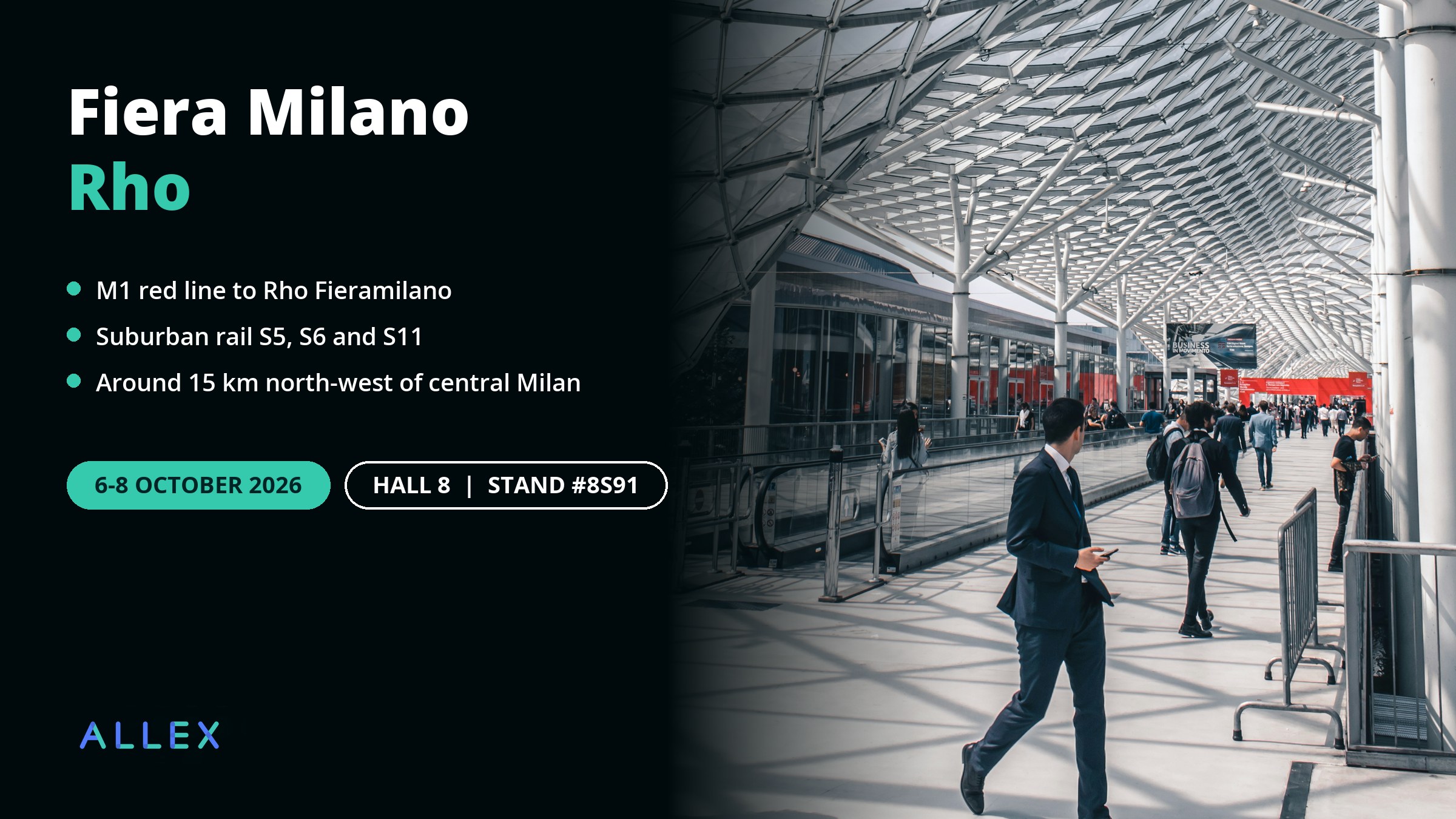
Fiera Milano is in Rho, around 15 kilometres north-west of central Milan.
For most people staying in the city, the simplest route is the M1 Red Metro Line towards Rho Fieramilano, remaining on the train until the terminus. Rho Fiera is also served by suburban railway lines including S5, S6 and S11.
Drivers can approach the exhibition centre using Milan's motorway network, and Fiera Milano has more than 10,000 parking spaces. CPHI also provides information on connections from Milan's airports.
The important thing is to plan this before leaving the hotel.
Typing "CPHI" into Google Maps at 09:47 and hoping Italy sorts out the rest is not a transport strategy.
One Italian travel myth worth clearing up
There is a piece of advice that has circulated among visitors to Italy for years: never throw away your restaurant or café receipt because the authorities can stop you outside and demand to see it.
It is wonderfully dramatic.
It is also not something we could substantiate as a current general requirement for tourists.
Italian businesses are subject to fiscal-document rules, of course, but we found no current official guidance saying that an ordinary visitor must carry every espresso receipt in case they are challenged outside the café.
There is, however, a legitimate tax reason why some visitors should keep certain receipts and documentation.
People resident outside the European Union may be eligible for VAT relief or reimbursement on qualifying purchases above the applicable threshold, provided the official conditions are met and the goods leave the EU correctly. Business travellers should also obviously retain whatever receipts their employers require for expenses.
So keep important receipts. Keep business expenses. Keep tax-free shopping documentation.
But the receipt for Tuesday morning's macchiato probably does not need to be guarded with the same intensity as your passport.
Please do actually see Milan
One of the stranger things about international trade shows is that people travel to extraordinary cities, spend three days beneath exhibition-centre lighting and then immediately return to the airport.
Please do not come to Milan and only see Fiera Milano.
If you have a few hours, start with the obvious. The Duomo is obvious for a reason, and its terraces provide one of the great views across the city. The Galleria Vittorio Emanuele II sits beside it, with La Scala and the streets of central Milan within walking distance.
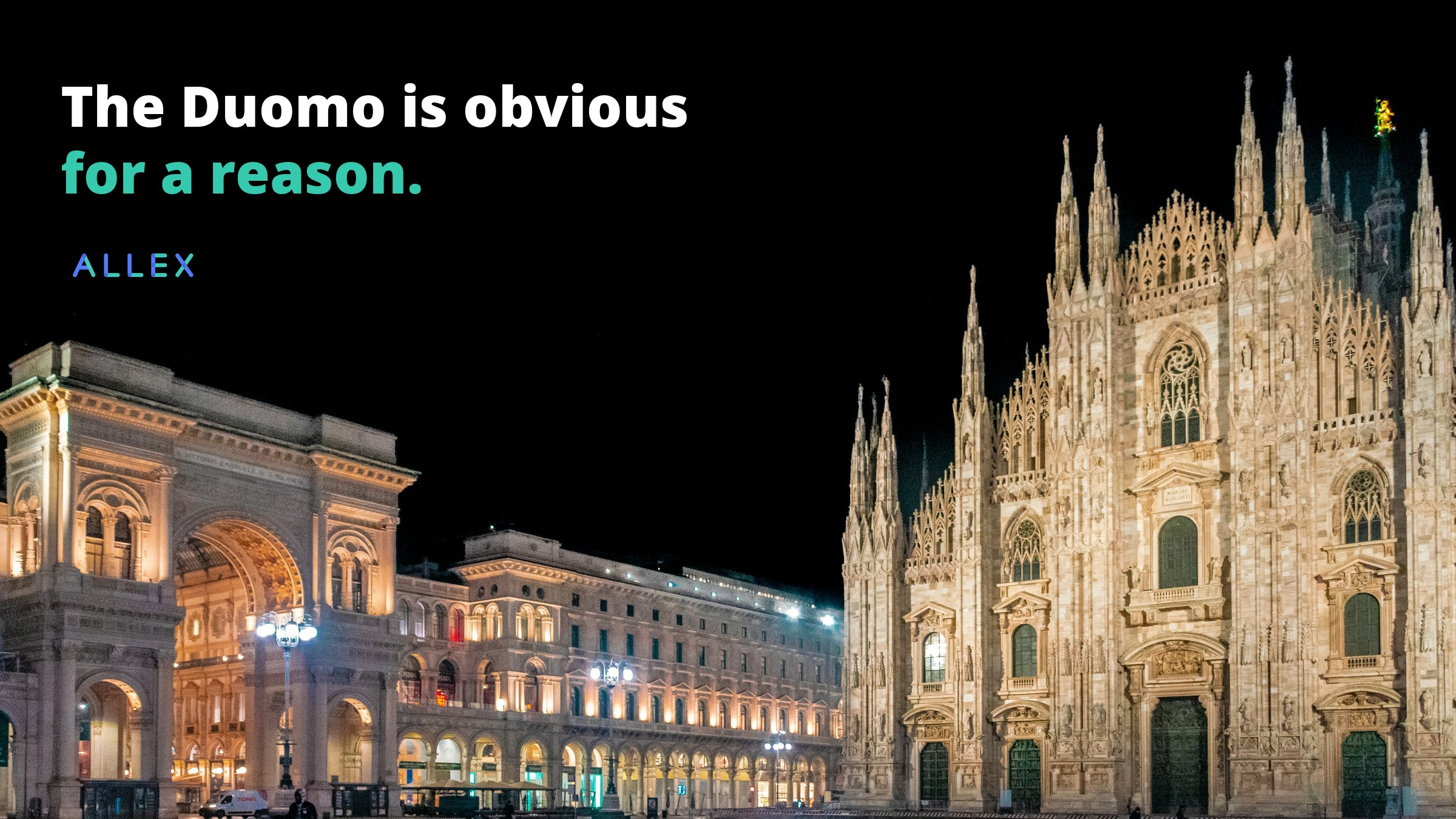
For an evening, Brera is an excellent option for restaurants, cafés and wandering, while Navigli and Darsena provide a livelier waterside setting for dinner and drinks.
If you have more time and can secure a ticket in advance, Leonardo da Vinci's Last Supper remains one of Milan's defining cultural experiences. Access is controlled and tickets are highly sought after, so this is one thing not to leave until you arrive.
And then there is aperitivo.
After nine hours discussing supply chains, capacity planning, pharmaceutical manufacturing and artificial intelligence, sitting down with a drink and something to eat is not merely tourism.
It is recovery.
A few things I would genuinely do before arriving
Book important meetings before Milan rather than hoping to bump into people. Download the CPHI Event Planner and use it to understand where those meetings actually are. Wear shoes you already know are comfortable. Leave gaps in the calendar for unexpected conversations. Carry a power bank. Take useful notes immediately after meetings rather than trusting yourself to remember everything three days later.
Most importantly, talk to people.
Not leads. Not badges. Not job titles.
People.
Trade shows work because thousands of individuals who would ordinarily require six weeks of LinkedIn messages, introductions, emails and Teams invitations suddenly occupy the same physical space.
That remains enormously valuable.
See you in Milan
Behind every medicine that eventually reaches a patient sits an extraordinary network of scientists, manufacturers, engineers, suppliers, CDMOs, technology companies, logistics providers, regulators, project teams and specialists.
For three days in October, a remarkable proportion of that ecosystem will occupy the same place.
That is what makes CPHI worth attending.
It is not simply about collecting leads or listening to presentations. It is an opportunity to understand where pharmaceutical manufacturing is heading, which problems organisations are genuinely struggling with and which technologies are moving beyond interesting demonstrations towards meaningful industrial use.
Allex.ai will be there.
You will find us at Hall 8, Stand 8S91.
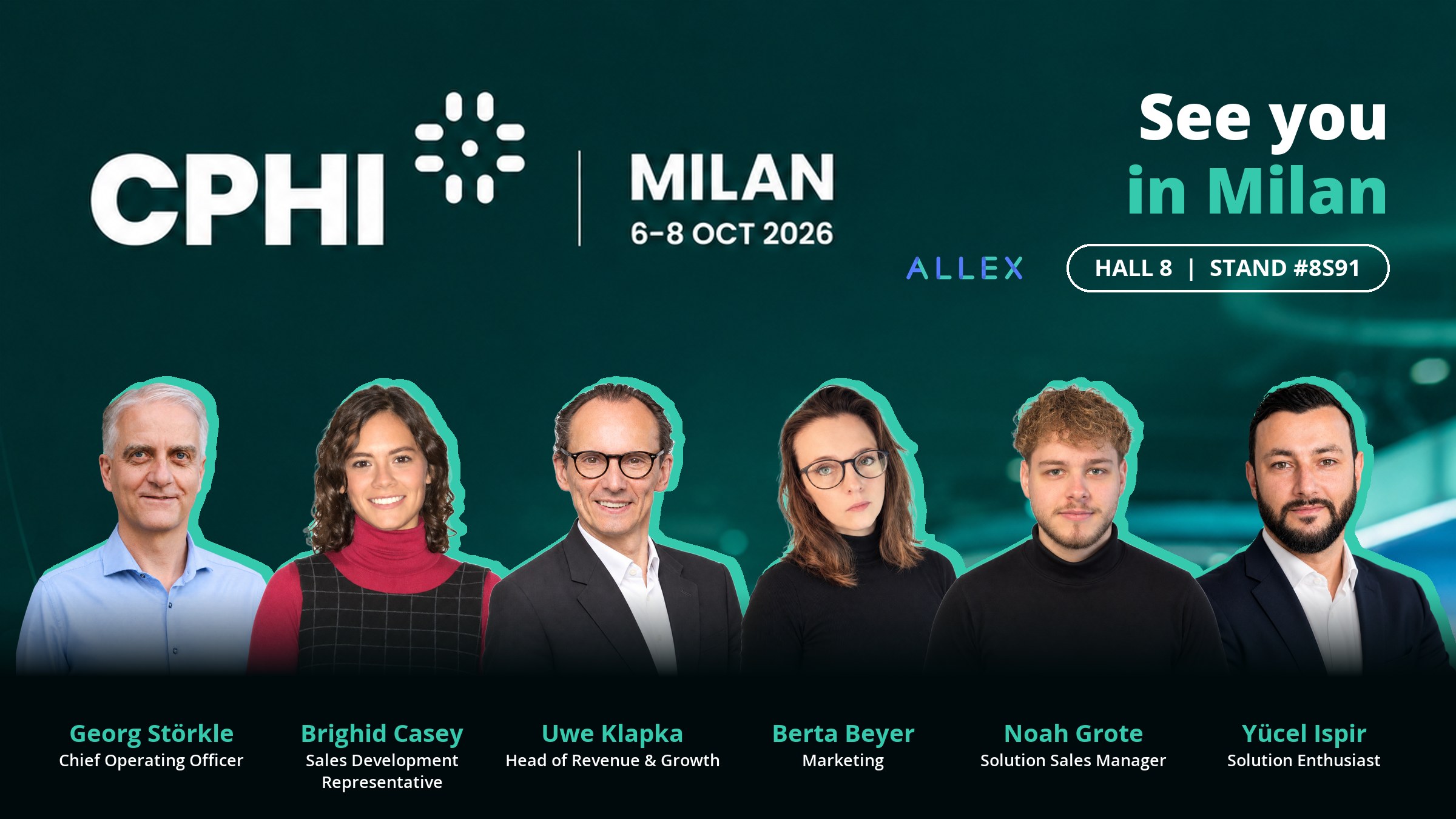
Come and challenge us with your ugliest resource bottleneck. Ask us about AI-supported multi-project management. Talk to us about capacity, CDMO operations, manufacturing, technology and project execution. Catch our Founder and CEO Holger Lörz at one of his two CPHI sessions, or connect with William Delaney for press, media, interviews, content and partnership opportunities.
Or simply come over for a coffee and tell us what is currently driving your organisation slightly mad.
Because somewhere among tens of thousands of people in Milan, there is a very good chance that somebody else is trying to solve exactly the same problem.
CPHI Milan 2026 takes place from 6 to 8 October at Fiera Milano, Rho. Allex.ai will be in Hall 8, Stand 8S91.
See you in Milan.
And seriously, wear comfortable shoes.
Sources
- CPHI Milan 2026, Official Event Website. Event dates, attendance information, exhibition areas and event overview. https://www.cphi.com/europe/
- CPHI Milan, Conference Agenda. Conference programme, content tracks, speaker information and Sustainability Summit programme. https://www.cphi.com/europe/conference-agenda/
- CPHI Milan, First-Time Visitors. Practical information for visitors, event scale, programme and venue guidance. https://www.cphi.com/europe/first-time-visitors/
- CPHI Milan, Leadership Summit. Official information on the Leadership Summit and participating executives. https://www.cphi.com/europe/leadership-summit/
- CPHI Milan, Sustainability Summit. Official information concerning the new 2026 Sustainability Summit, roundtables and networking programme. https://www.cphi.com/europe/sustainability-summit/
- CPHI Milan, Networking Events. Details of the Welcome Reception, Duomo experience, City Run, networking activities and evening programme. https://www.cphi.com/europe/attend/networking-events/
- CPHI Milan, Travel and Hotel Information. Transport information for Fiera Milano, airport connections and local travel guidance. https://www.cphi.com/europe/travel-hotel/
- CPHI, Complete Guide to Travelling to CPHI Milan 2026. Official 2026 visitor and travel guidance. https://www.cphi.com/europe/insights/your-complete-guide-to-traveling-to-cphi-milan-2026/
- CPHI Event Planner. Official exhibitor search, meeting and event-planning information. https://www.cphi.com/europe/the-event-planner/
- Agenzia delle Dogane e dei Monopoli. Official Italian customs guidance concerning VAT refunds for eligible non-EU residents. https://www.adm.gov.it/portale/rimborso-iva
- YesMilano. Official Milan visitor information covering the Duomo, Brera, Navigli, Leonardo's Last Supper and other attractions. https://www.yesmilano.it/
- CPHI Online, Allex.ai. Allex.ai product information and the published Lonza customer testimonial relating to CCPM, cleaning and changeover processes. https://www.cphi-online.com/
- All sources checked on 23 September 2026. Event programmes, speakers and timings remain subject to change.
Deutsche Fassung folgt. Bitte hier die Übersetzung des englischen Artikels einfügen.

.svg)
.svg)
.svg)


